Site Feed (Atom)
Caves, Warriors and more great food......
 :: Bell Tower - Xi'an ::
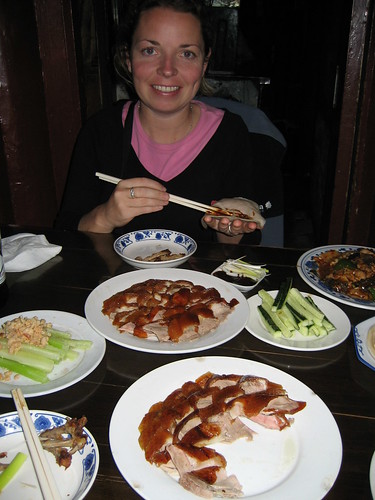
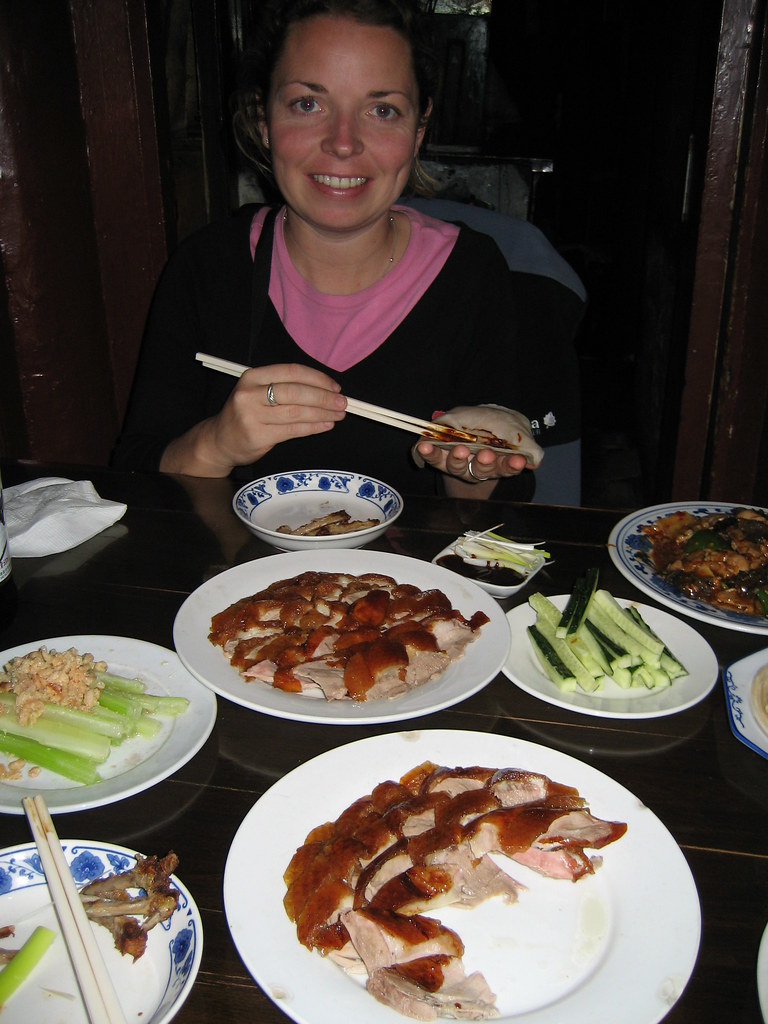
Travel has definitely become a lot more challenging recently. When we left Beijing we left the tourist haven of English and picture menus behind us as well. On saying that some English menus had dishes like "Creature seeking refuge", "Moving meat", "Pakistani sky" so they didn't really enhance the decision making process. Now, faced with Chinese menus and no English speakers we seem to be constantly diving into the phrase book or taking little walks around the restaurant to see what everyone else is tucking into. The stable dish has become Kung Pao chicken ie. chicken with peanuts and chili. It's a great banker as it's on every menu - it is getting a very healthy/unhealthy run. To accompany the Kung Pao we hope for the best and point and shoot. I can hand on heart say that we're still waking up each morning looking forward to another tray of dumplings and a couple of dishes plus a Kung Pao for dinner. Perhaps it's the MSG, a healthy spoon of it seems to be an essential ingredient of most dishes.
 The city of Datong turned out to be an interesting place to spend a couple of days. On arrival the local tourist office (CITS) tried to take us under their wing and do all in sundry for a "small" commission. When we arrived the office was jam packed with lots of lost looking souls frantically trying to sort out a bed for the night and a tour for the next day so we decided to take advantage and dump the bags there and find accommodation ourselves. Bag minding is not exactly their function so they weren't overly impressed with us when half and hour later the office emptied and we popped up onto their radar. Feigning interest in one of there one day all inclusive tours we managed to escape. I should add here that after managing to buy railway tickets across Russia, find all our own accommodation and make it to most tourist places on a local bus going the easy way on a tour is almost like giving up.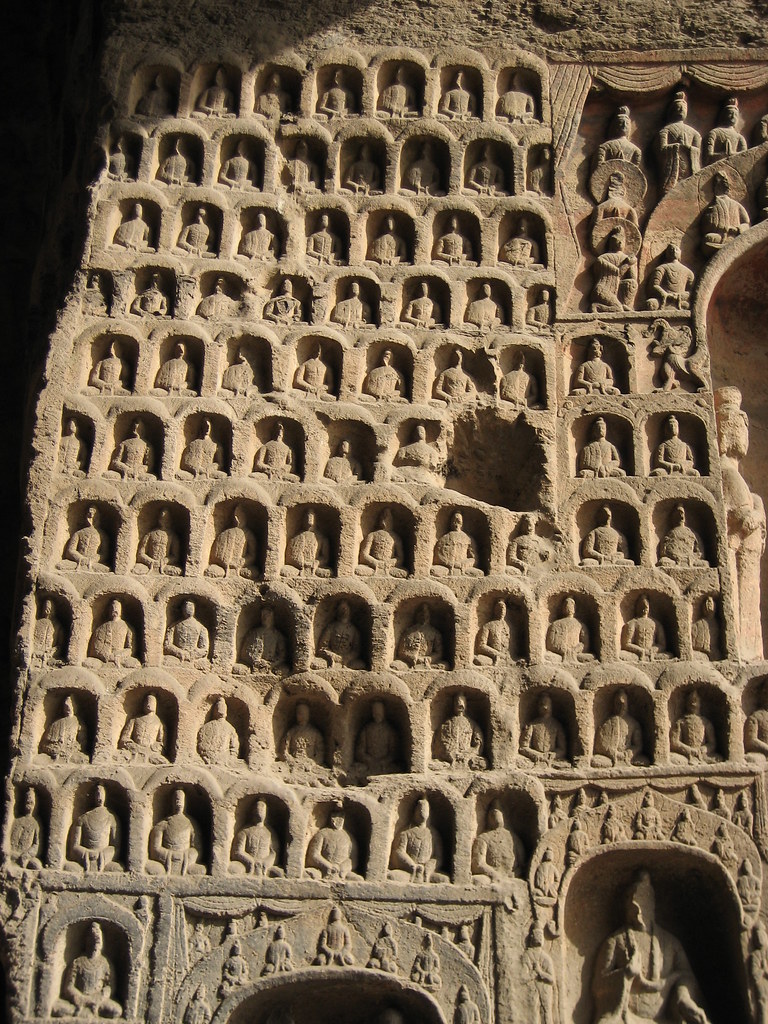
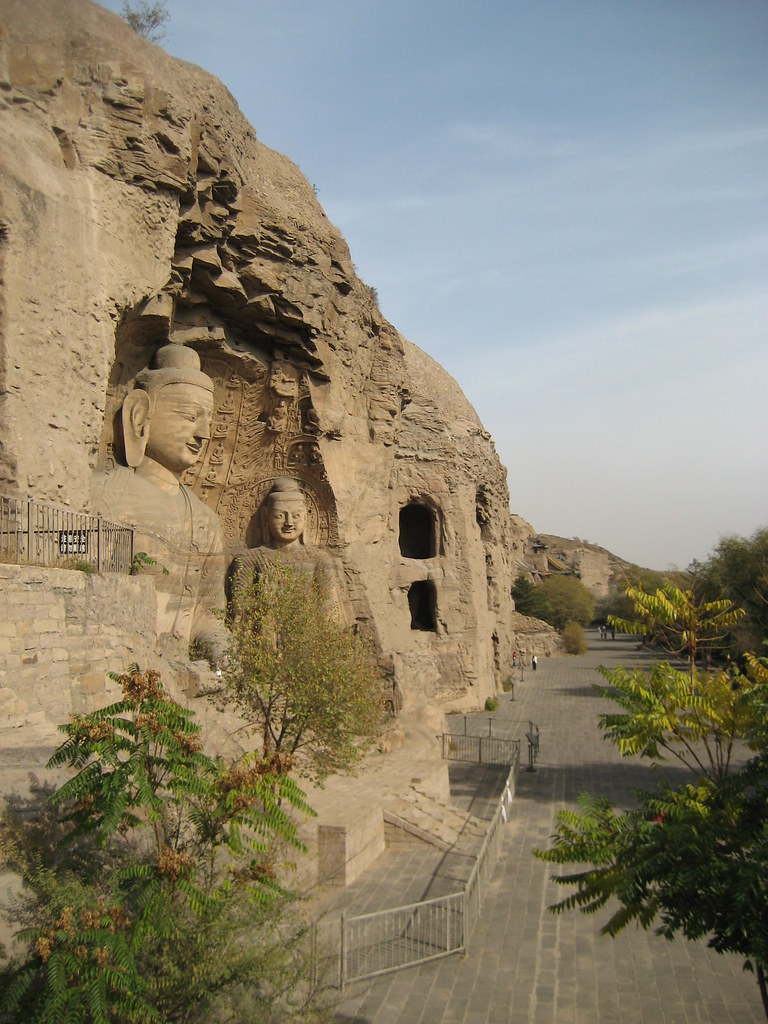
Staying two nights in Datong we took in the Yungang Caves and the Hanging Monastery. The Yungang Buddha Caves stretched for spectacular 2km and contained thousands of skillfully carved buddhas. The Hanging Monastery perched on the side of a cliff wasn't a climb for the fainthearted. When you're up the top you can't help but feel that there is not much holding the wooden structure up there.

From there it was on to the picturesque old walled city of Pingyao. This was our first experience of the Chinese sleeper trains. The cheap bed option here is the hard sleeper ticket. Bunks in this class are three high and so are a novelty to us. Having spent a night under a nice duvet up the very top without getting vertigo I have to say it's not the worst idea. Once you're up you're up. What is annoying about the Chinese trains is the non stop smoking and people listening to their MP3 players and crooning along.
 Anyhow ... Pingyao, streets of old wooden buildings sporting red lanterns makes this place look fairytale like at night time. We rented bikes and took off on a leisurely 5km cycle to see a temple on the outskirts of the city. Unfortunately we happened upon the one signpost that pointed in the total wrong direction and an hour and a half later we arrived at a temple miles and miles away from the intended destination. We've since bought a little compass to double check dubious signposts. It all counts when you're getting there under your own steam! An added bonus of our hostel was a DVD room with a folder of bootlegged DVD's so we whiled away a few nights catching up on the latest Hollywood offerings.
 Anyhow ... Pingyao, streets of old wooden buildings sporting red lanterns makes this place look fairytale like at night time. We rented bikes and took off on a leisurely 5km cycle to see a temple on the outskirts of the city. Unfortunately we happened upon the one signpost that pointed in the total wrong direction and an hour and a half later we arrived at a temple miles and miles away from the intended destination. We've since bought a little compass to double check dubious signposts. It all counts when you're getting there under your own steam! An added bonus of our hostel was a DVD room with a folder of bootlegged DVD's so we whiled away a few nights catching up on the latest Hollywood offerings.
 Xi'an turned out to be an awful lot bigger than we expected. After coming from the small old town of Pingyao it felt like a jolt back into cosmopolitan living. The good news is that thanks to the discovery of a load of terracotta guys in 1979 it's now totally geared for tourism and there are tonnes of hotels. You can live it up in a top class hotel room with all the frills (including slippers, toothbrush, comb, soaps) for very little. We have the charade down to a fine art now. Hotels post big boards of prices (read lies) and then offer you discounts. After lots of examining of rooms, sitting on the beds, turning on and off bathroom lights, huffing and puffing,fake walkouts, and numeric offerings on calculators a price is eventually agreed. Given the right mood it can be a highly entertaining process.

The terracotta warriors are to be found in a museum outside Xi'an city. A huge complex is built over the excavated pits where they were discovered. We got a top tip to hit the place around lunch time when all the frantic tour groups (with sharp elbows) are off getting some grub. Luckily we caught this lull and didn't get crushed. The main pit with all the warriors lined up in battle formations was very impressive. What adds to the experience is that you're looking down into the trenches where they were discovered rather than walking around a modern air conditioned museum of displays . One thing neither of us realised was that all the warriors were in pieces when they were unearthed. The scale and accomplishment of the restoration process is astounding. On saying that it would seem like they have only excavated the tip of the iceberg - there is long a way to go with potentially thousands more warriors buried in the surrounding areas. We also enjoyed the history Museum in Xi'an, it has a great, chronologically laid out collection which really re-enforces how advanced the Chinese civilisations were in their craftwork and design.

We caught a local bus out to the warriors without too much trouble. Our return journey was a little more amusing ... after a few minutes the bus developed grave problems. From what we gauge every time the driver put the bus into first gear the engine choked. The mechanic in him decided that the best approach was to pull over and rev the engine in neutral hard for about 10 minutes solid. From the roomy melting backseats directly over the hot engine his troubleshooting methods left a lot to be desired. During these revving sessions if anyone dared get on or try to get off the bus they were shouted at. When we finally got into first and moved forward again it was like a reenactment of the movie "Speed". Determined to keep the bus in second gear speed the driver drove like there was a ticking bomb under us. We accelerated through amber lights and coasted slowly into red lights only to take off at the last second. We went through a toll booth at one stage where, maintaining our optimum velocity, the conductor jumped out to run ahead of the bus and pay the toll before running aside the bus and leaping back on board. Finally in the middle of a busy motorway and after leaving a long plume of black smoke behind us the driver gave in and evacuated us onto another bus.
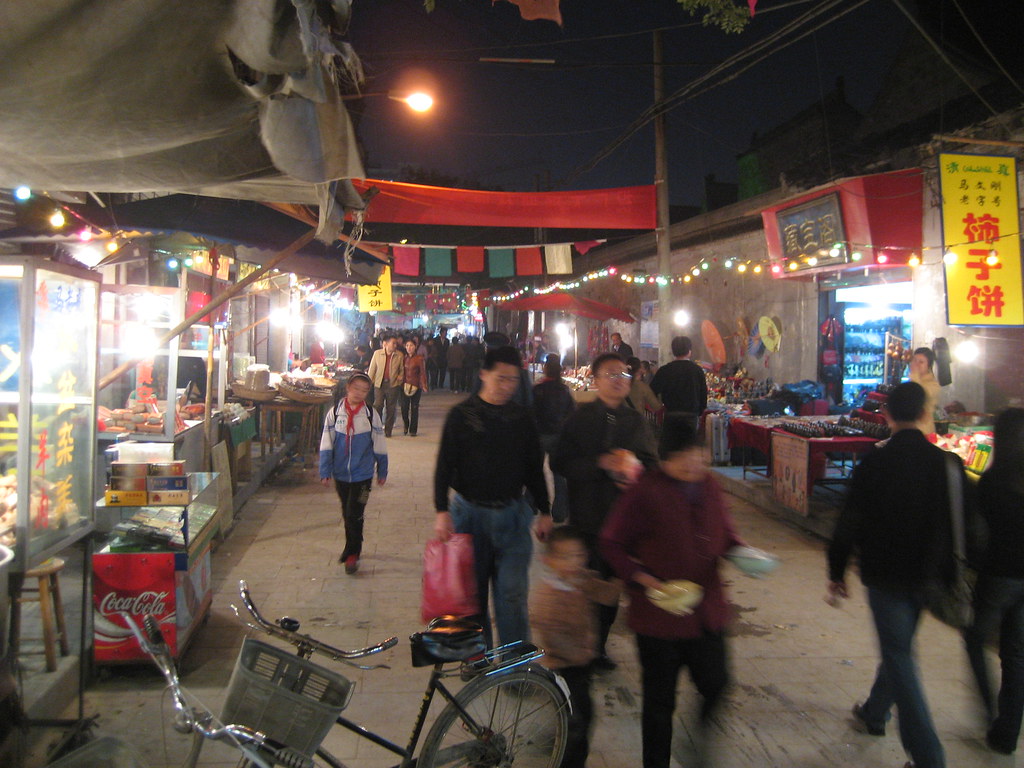 One thing that makes Xi'an particularly unique is it's huge Muslim quarter. Sprawling for blocks upon blocks it's lined with restaurants and street carts cooking up local Xi'an specialities. At night time fairy lights light up area and people take to the street to eat a variety of street foods , most of which were new to us. Fried persimmon puddings, a huge variety of skewered things for the grill, all sorts of filled pancakes and breads made for lots of sampling.
Breaking our journey East we stopped in the town of Louyang famed for it's Buddha caves carved into the cliffside.
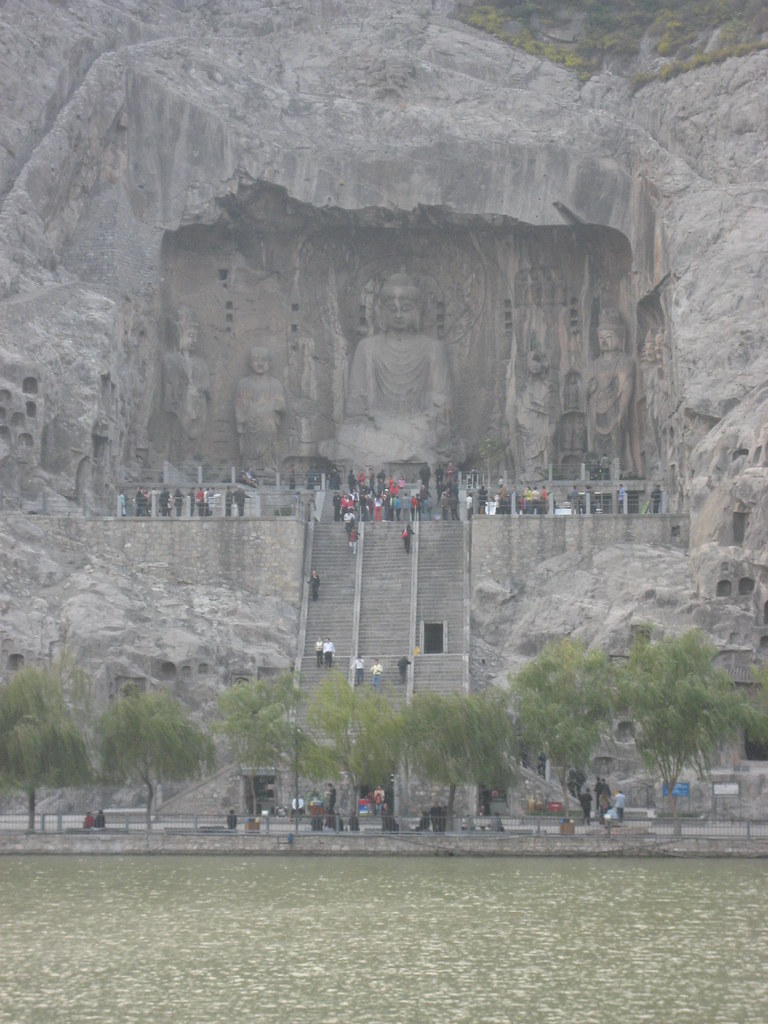 This location was more geared for tourism that the last set of Buddha caves we saw but equally impressive. Unfortunately, many of the Buddha heads have been looted and are sitting in museums and private collections in the Western world.
When we're travelling from one "small city" to the next we have to constantly remind ourselves that a small city in China is one with a population of a mere 5 million - not a small number by any accounts elsewhere in the world. When it comes to taking a train between two cities it perfectly reasonable that thousands of locals need to make the same journey ... the logic of "it's Monday lunchtime who'd want to travel then" goes out the window. In such a populous nation that any hour is rush hour. Hard seat train travel under these conditions is an adventure in itself.
Hard seat tickets are sold first (thankfully seat assigned) and when they have sold out hard seat no seat tickets are sold. There doesn't seem to be an upper limit on these. The result is smoky carriages jammed full of people, sitting, standing, sharing seats and leaning over into any small gap. Most people typically have a huge sack that gets plonked in the aisle doubling as a seat. If anyone makes the slightest move suggesting that they will be vacating their seat there are three people actively elbowing to get into the space. With everyone shoehorned in so tight that any movement is impossible there's a shout from the back of the carriage and after a lot of grunted manoeuvring a train attendant boldly attempts to wheel a trolley, selling cling-filmed cucumbers down the aisle. It's so ridiculous that you have to laugh any ask why.... we've yet to see anyone purchase a cucumber so it's not the most profitable of food carts.

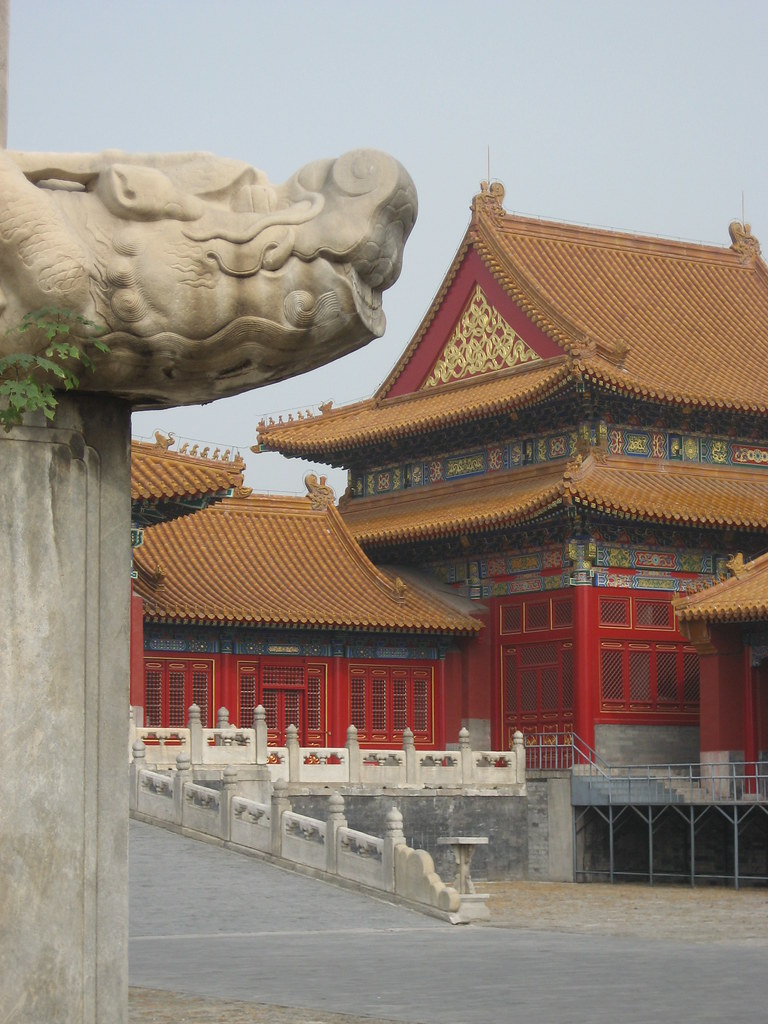

 Then it was on to the immense Forbidden City, right in the heart of Beijing this complex of palaces was home to two dynasties of emperors and thus off limits to Joe Soap for 500 years. You need an entire day to wander around the grounds and take it all in.