February 11, 2009

Roasting Marshmallows in Guatemala


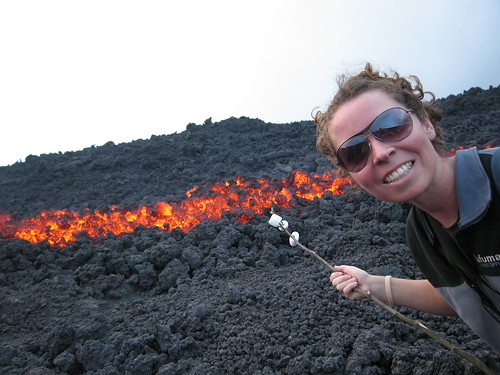
:: Marshmallows vs the Volcano ::


One surprising element of this capital was sheer North American-ness of Guatemala city. Huge malls, car dealerships, 10,000 square foot fast food chains and secure gated accommodation. One thing is for sure, someone has a lot of money. We were dumped out at the terminus and pointed in the direction of a city bus connecting to the Antigua city service. A short while later we were boarding the Antigua bound bus. This was a new level in school bus comfort; this bus had annoyingly altered the seats to accommodate three people each side of the aisle rather than the usual two one side three the other. The result was an aisle about a foot wide and a nightmare to negotiate with backpacks. Hilariously as the bus filled up it got worse. People squeezed in and someone sat over the gap in the aisle.


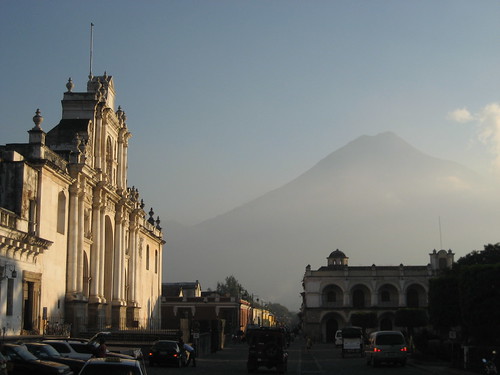
:: Volcano looming large over Antigua ::

Just before night fell we pulled in Antigua, city of Spanish students and tourists. It's a far cry from what you expect a Guatemalan city to be like, in fact many of the guidebooks describe it as a theme park. McDonalds is super flash, possibly one of the best in the world complete with McCafe, McInternet, terrace and fountain. Add an equally tasteful Burger King up the street, bagel shops, coffee houses and sushi restaurants and you can imagine the swishness of it all. Pretty streets with lots of guesthouses are overshadowed by a volcano, it really is a picture postcard place. Antigua is a huge spanish school machine and all the services cater to the homesick student, you can't really be homesick when you can get good coffee and bagels can you? Thankfully some real Guatemala is still to be found in the market comedors (restaurants) and street food. Although on saying that we found a lady who whipped up some great tosdadas, we went back to look for her on successive days but she'd disappeared. Nothing more disappointing.


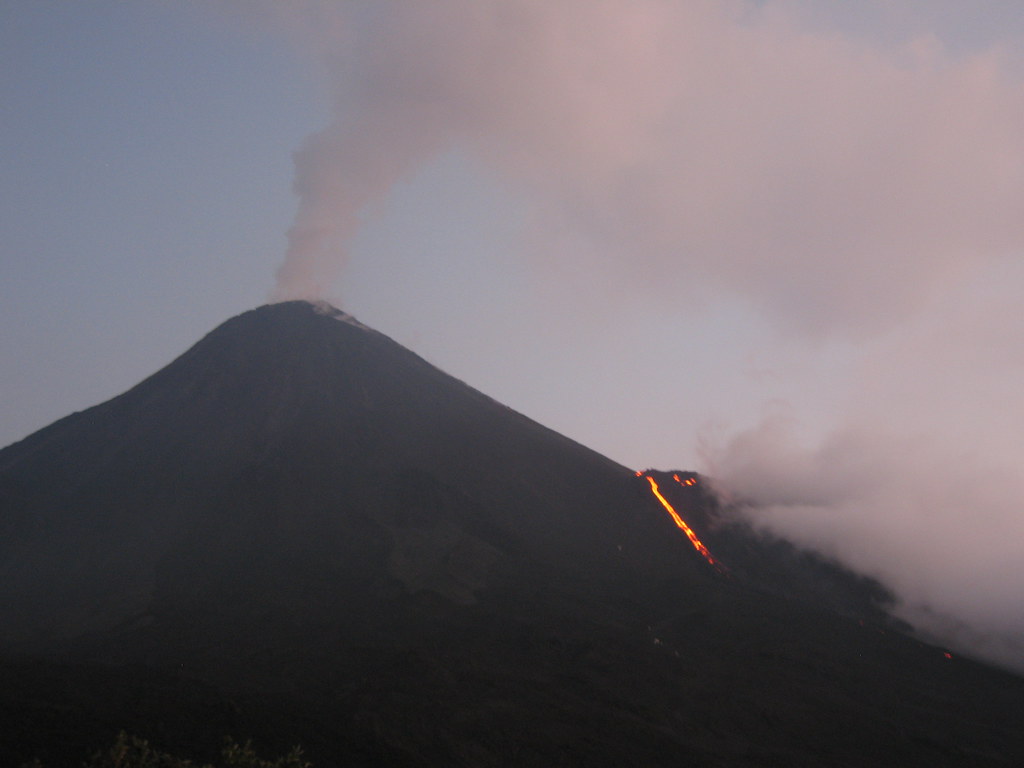
:: Pacaya Volcano - very much active ::

No trip to Antigua is complete without taking a trip to the active Pacaya volcano. This was a real highlight of Central America, the thrill factor of climbing a volcano with river of lava running down it's side is not to be underestimated. We set off with strong shoes to withstand high rock temperatures underfoot and a big bag of marshmallows. Minibus tours run to the entrance where we met with a guide. After an hour and a half walk we turned a corner and saw the volcano and the red and orange river of molten lava pouring down it. There are two tours each day, we chose to do the evening tour to see the lava in the night. As it is to be expected in developing countries that haven't had too much regulation imposed on the tourist industry the guides lead us on and up and we soon found ourselves scrambling across sharp, loose rocks towards the molten lava. We finally got within marshmallow roasting distance i.e. a few feet although the heat was the only things stopping anyone getting any closer. Everything going splendidly until a rock broke loose of the stream a hundred feet above us and a frantic crowd hysterically scrambled across the volcano to get out of its path causing a mini landslide. Altogether not the safest of situations, there's probably not that many places in the world that bus tourist straight up into the unpredictable, insecure banks of a lava river. Anyhow a thrilling sight and unforgettable experience. As darkness fell and the clouds lifted it was spectacular as we hiked back down in the moonlight to the bus.

Our second stop in in Guatemala was at Lake Lago de Altitulan, while we were trying to decide which town to stay in on the lake, a bus came up the road with "San Pedro de Lago" written on it and made the decision for us. We climbed in over the cargo which was about 400 steel rods the length of the bus stacked in the aisle. No problems getting down the narrow aisle this time, the steel rods added plenty of assistance giving good clearance over the seats. A bumpy three and a half hour journey took us to San Pedro where we chilled out on the lake for a couple of days.

We were halfway to the next city, Xela, when we realised it was a massive detour out of our way and we really didn't have a good enough reason to be heading there. It was too late to do anything about it and in fairness it wasn't the worst of stops. We took advantage of high speed, low cost internet and got to sample some good street food. Arriving on a sleepy Sunday to closed windows and shutters once again luckily we managed to find a busy restaurant serving up huge bowls of seafood soup.

After ticking Xela we made the arduous journey north towards Coban. Poor roads and long distances forced us to do the journey over two days. In the final stint of the journey we were packed into a tiny minibus for four hours only to reach a huge landslide. People were frantically crossing over the debris which stretched a hundred feet shouting "rapido rapido". It was unclear how dangerous it was but it was crystal clear that nothing was been done to rectify the situation nor would be done in the coming hours or even days. We followed the crowd and scrambled to safety and the gawking crowd at the other side. We later learnt the landslide was two days old so we made the right decision to cross, otherwise we could have been stuck there for days.
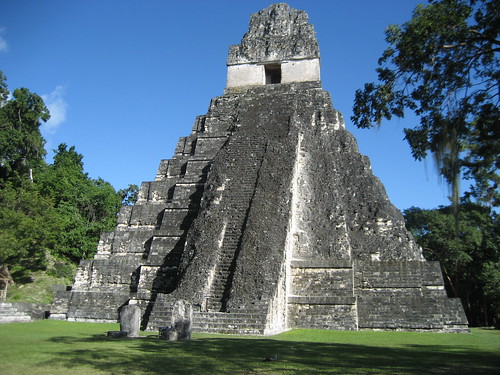

:: Tikal ::

Our final stop in Guatemala was St. Elena, it's probably better known as Flores and jumping off point to explore Tikal. Flores is a claustrophobic tourist trap reached by a bridge from St. Elena, if you have a choice opt for St Elena. The following day we set off in the rain for Tikal ruins. A three hundred percent increase in entrance fees since last year ruined all calculations to have just enough Quetzals left to get us out of the country. Tikal was impressive the sheer size of the structures sets it apart from Copan Ruinas. The start of our day was marred by heavy rain. Some of the structures can be climbed via rickety stairs that take you hundreds of feet up high above the jungle. The Grand Plaza is also an impressive sight, and a great spot for people watching.

Setting off from Flores, we made a run for the Mexican border, seeking some sun....and some real Mexican food.

Read Full Post...

January 25, 2009

Chicken busing through C.A ...


:: Sunset on Isla de Ometepe ::


Our first central American stop was Panama city. We stayed in Panama Viejo, a very old district out on a peninsula. Lots of buildings in the area have been restored but the vast majority are derelict shells with beautiful old facades. The area up until recently was generally considered rundown and unsafe but in a drive to create a tourist area, a highly policed, sectioned off, historical district has been created. More and more touristy related industries are being attracted to the area. The attraction of the area is the fact that you can stroll around the peninsula by the coast admiring the view of ships lining up to enter the Panama Canal. If you do accidentally stray out of the safe area locals are very quick to point you back in the right direction. In fact it's all so coordinated that we started to get really curious about just how dangerous it really was up the road. One thing that stands out about Panama City is how North American it is, Burger King, McDonald's, Popeye, Dunkin Donuts can be found everywhere. Big impressive shopping malls house the shops of all the big brands. High rise condo and apartment blocks have sprung up all around the city.


The next part of the journey was up through Panama, into Costa Rica and on to the capital San Jose before catching an early morning bus to the Nicaraguan border. A school bus ride took us to the shore of Lake Nicaragua and a tiny little ferry bobbed us out to the volcanic Isla de Ometepe. The island is dramatic, two huge volcanoes (one smoking) dominate the small island. Arriving at the port we confidently marched up the road to look for the main town and after a few minutes copped on that we'd been dropped at the wrong port. We started walking along the one road in the direction of the town but were quickly advised by locals that it was "very very far away" but a bus should be along shortly that would take us there. An irregular bus service around the island is an understatement we reached our final destination a couple of hours later. There's not much to do on Ometepe except admire the volcano and explore the island. Unfortunately while we were there the water level in Lake Nicaragua was unusually high so all of the beaches were underwater. We passed on climbing the volcano in the knowledge that we were going to be inundated with opportunities to climb volcanoes further up the road. Instead we opted to rent a motorbike for the day and whizzed around the island, pretty much visiting every nook and cranny.

Once you enter Central America you're in the land of the chicken bus. They are decommissioned old yellow school buses from America which have been colourfully resprayed and given a new lease of life. It's not unusual to still see the old school bus rules up on the wall over the driver but normally the interior is covered with stickers and big religious slogans. They're called chicken buses because... well ....you can bring almost anything onto them. All the old school buses have an emergency exit at the back of the bus. Throughout Central America at every stop or big town a parade of sellers gets onto the bus, nosily proceeds down the aisle and out the emergency exit door and into the next bus. Sometimes ten people will get on all selling the same stuff. Buckets, earrings, drinks, spring onions, bottle washers etc. you name it you can buy it. You often really don't have to move far from your seat to do all your shopping. Another highlight of the chicken bus is being constantly subjected to old Chicago, Phil Colin's and Byran Adams tracks from the 80's.


And so it was to the backing track of Bryan Adams's "Please Forgive Me" that we pulled into Granada city, the oldest city in Nicaragua. Granada is a beautiful old city that's popped onto the tourist radar. The touristy area is a pedestrian street filled with hostels, upmarket hotels and flash restaurants. It's all very lovely but not exactly the real Granada, it's the dressed up version. After searching around for accommodation in the touristy area we got a tip on a place a little further afield. We ended up staying in a little gem of a place Jorge's Hotel right in the local market. Our lodgings and surrounds turned out to be so perfect that we adjusted our schedule to stay a couple of extra nights. Note, our place had the added luxury of a kitchen, en suite bathroom and cable television a far cry from what was available in the touristy area. Proximity to a supermarket that sold top class steaks at ridiculously cheap prices meant we didn't go hungry. We ate out in the market for lunch, again a local tip, hidden deep in the market up a little alley, was a little family restaurant churning out amazing food. The city is also famous for it's local speciality food - vigaron. Busy vendors in the market serve up a banana leaf filled with yuca, cabbage, onions and fried pork skin. It's a traditional filling dish which tastes very similar to the Irish bacon, cabbage and potato dish. Granada was a great stop, not only does it have lots of old world charm, it has a very local feel and if you feel like doing the touristy thing it has lots of restaurants and bars. Even in these food and drink is surprising good value. As the city gets more popular this is sure to change.

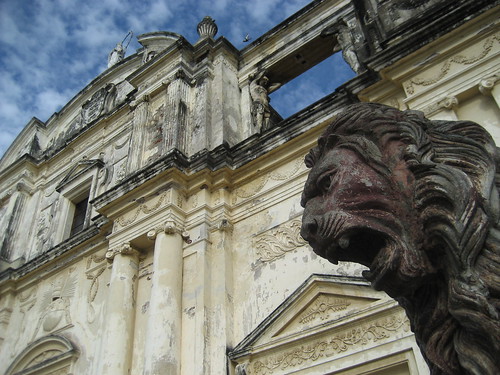
:: Leo in Leon ::

Moving on from Granada we connected through the capital Managua to the city of Leon. During the time we were passing though Nicaragua there were presidential elections on and demonstrations in full swing. Nightly on the news there were pictures of young kids with their faces covered, flare guns in hand setting things alight, vandalising property and generally being a nuisance. When we arrived in Managua a rally was about to start, thousands of people were being bused in and the mood was hostile. Luckily we had a quick connection through and out on to the city of Leon. Leon, it's similar to Granada, without the grand buildings it's not quite as majestic. We'd met travellers coming the other way who had raved about the place. Two busy backpacker hostels in the centre seem to generate a bit of nightlife which may make the town a memorable stop for some people. For us Granada was hard to beat, Leon was pretty but just not as happening as Granada. We spend an afternoon wandering around the streets people watching. By nightfall all the demonstrators were arriving back from Managua, creating an edginess on the streets. One street was closed off by police after tyres were set alight. Our biggest regret in Leon was rushing out of it to catch a bus north. Leon's bus station had one of the best food sections in Nicaragua, seafood soup was been dished out and there was lots of meat being barbecued. Maybe next time!! If you're passing through in the meantime please give it the time it deserves.

Our final stop in Nicaragua was the highland city of Matagalpa. Part of the reason we went there was to go into the rainforest at the Selva Negra coffee plantation to hopefully spot some monkeys. We spent a few hours hiking around the plantation and cloud forest and didn't see a dickiebird. Turns out we were over enthusiastic with the scope of our search. All the monkeys were hanging out at the start of the trails near the lodge. When were within 200 metres of the end of our hike we came into earshot of the howler monkeys. The noise these little animals create is astounding and a little frightening when they howl in unison. While we were watching them they moved overhead and pelted berries down at us. Matagalpa itself was a pleasant stop most memorable for it's burger vans which convened nightly in the main square.

We departed Matagalpa very early the following morning in order to give ourselves the best possible chance of making it over the border and as far into Honduras as we could make it - preferably past it's dangerous capital Tegucigalpa. The journey proved to be a marathon of buses, twelve during the course of sixteen hour day of travel, but we did make it to Tegucigalpa and on the smaller safer city of Comayaqua.

Stopping in Comayaqua for the night we recharged our batteries and got ready for another long day of buses connecting through San Pedro Sula. Our next stop was La Ceiba, gateway to the Bay Islands, where we'd planned to do a week or so diving. Utila Island is a famous diving centre with some of the best value courses and fun diving packages in the world. We arrived into La Ceiba to the depressing sight of torrents of flood water running down the road and frequent heavy rain showers. Totally unsuitable conditions for diving as it all leads to murky unsettled waters. Undiscouraged we hung around La Ceiba for a couple of days waiting for the weather to improve before biting the bullet and chancing it in the hope that we'd get a lucky break. Standing on the ferry deck sheltering from a torrential rain shower we were really questioning our wisdom. The small ferry was violently thrown around the choppy waters. Within ten minutes everyone was looking a little peaky. Staff on the boat were monitoring everyone very carefully (plastic bags and paper towels in hand). Half an hour into the journey most people were looking decidedly green but nobody was sick. A little girl suddenly puked and within thirty seconds everyone else simultaneously chucked. The ferry staff very efficiently collected and redistributed sick bags and paper towels. Clearly the situation occurs very regularly.

:: View from our balcony on Utila ::

One of the strangest things about Utila and the Bay Islands is that you suddenly enter into a world of Caribbean influence. English is the main language spoken and everything and everyone is straight off a "Lilt" advertisement. Golf carts ply around the tiny island and to be honest if you're not diving there's not that much to do. Still raining when we got there we waded up and down the road in ankle deep flood water checking out the different dive schools. Despite the weather we signed up for our Rescue Diver Course. The course involved a couple of days of classroom work which would be unaffected by the rain. When we did get into the water to do the practical side of the course we were too busy playing out scenarios and bringing unconscious divers to the surface to worry about poor visibility. On the third day the weather broke and we finally got to see sunny Utila and it's beautiful sunsets. The following days were sunshine filled warm days. We got a few more fun dives under our belts, hunting for seahorses and tackling swim throughs and before we could be tempted into more courses we left for the mainland.

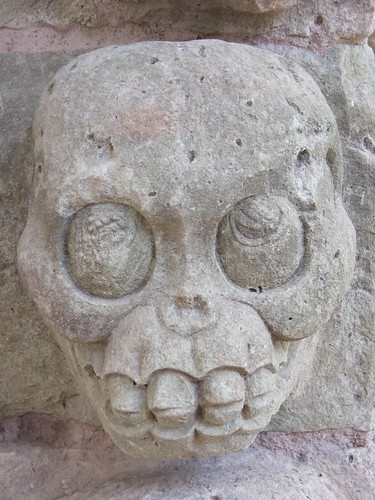
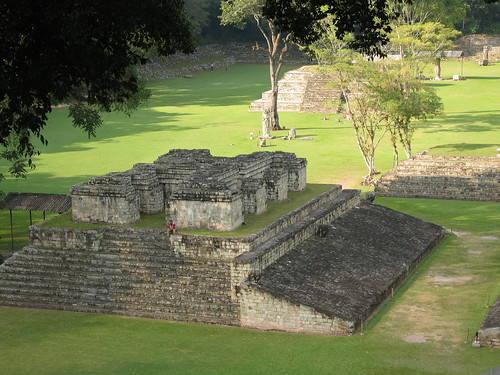
:: Scary thing at Copan Ruins ::

All roads lead to back to the annoying transport hub of San Pedro Sula where we connected on to Copan Ruinas home to Honduras's Mayan ruins. Arrival day coincided with a Sunday and election weekend both contributing to just about every business being closed and Copan Ruinas being as dead as a doornail. ( Interestingly - it seems that in most Central American countries, all businesses that serve or sell alcohol are closed for the 24 hours before election day) Sunday is one of the best days to travel in Central America because everything is shut but it's also the worst time to arrive anywhere because even the busiest of cities can look drab, unwelcoming and very unhappening. Wandering around the dark streets of the town we were just about to throw in the towel and break into our emergency tin of sardines when we happened upon the only street with a bit of food action going on. Street food in the form of baledas, fried chicken & chips and skewers of meat meat with tortillas and salsa was being served up. Eaters sat at plastic chairs and tables while the local population of stray dogs looked on hopefully with forelorn looks. The following day we strolled out to Copan Ruinas to see the ruins. An informative museum houses lots of the artifacts and offers a good insight into life was in ancient Copan.


:: Copan Ruinas ::

Our last stop in Honduras was Gracias, although it proved to be a somewhat briefer stop than anticipated. We spent four hours getting there; arrived and within fifteen minutes we were backtracking out of there. Gracias is located at the edge of the cloud forest, romantic and ecologically attractive as this sounds it must be remembered that cloud forest is simply a forest shrouded in cloud thus the weather is damp and miserable. The one main reason we'd come to Graicas was that a certain guidebook had touted one of it's restaurants as having the best and most authentic slow cooked Hondurian food in the country. The said restaurant was closed, the weather was rainy and miserable and there really wasn't a good enough reason to stop in Gracias for the afternoon so we grabbed a quick lunch of chicken and chips (served up in the back of a garage cum carpentry shop amongst wood shavings) before catching the next bus two hours back up the road. This is far from the first time that we've been in this situation. It's truly amazing how you can spend hours getting somewhere, get off the bus and say "nah.. not for us", and then spend another few hours backtracking. You would think that the four hours wasted on a bus would be mind numbing, somehow it just doesn't register sitting on a bus getting out of there and making headway becomes the priority.

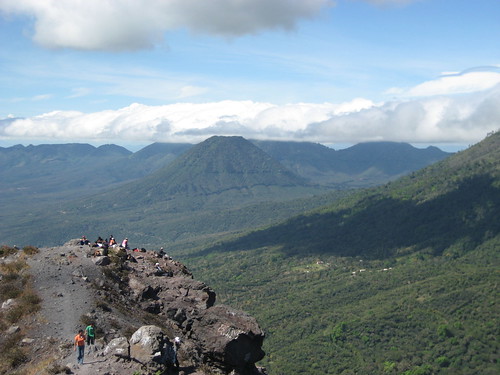
:: Volcano vista ::

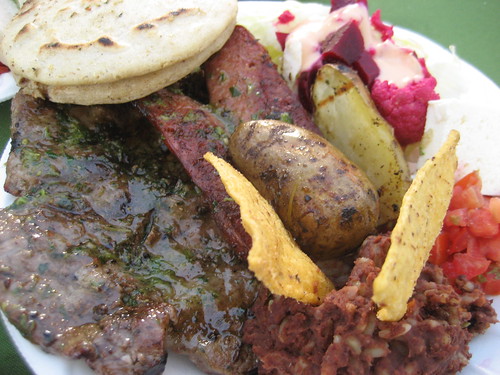
As we were in this neck of the woods we felt the journey wouldn't be complete without a foray into El Salvador. As the smallest country in Central America distances are very very small. Crossing over the border at El Poy we climbed aboard the chicken bus network and made our way south and west towards the city of Santa Ana where we got very comfortable and ended up staying for six days. There were noticeably less tourists in El Salvador, it does have a bad reputation when it comes to murder statistics which naturally keeps a lot of tourists away. It's perfect surfing waves on its Pacific Coast attract surfers but it doesn't quite have the full holistic tourist appeal. Our experience of El Salvador was fantastic, people were friendly, the landscape was beautiful and the food very different. Pupusas are the favoured snack churned out by restaurants. Tortillas filled with frijoles or cheese topped with pickled cabbage and salsa. Santa Ana was a nice small scale city with supermarkets, restaurants, bars - although we're pretty sure lots of them doubled up as brothels. Good bus connections to the nearby countryside made it an ideal base. We made a day trip to the nearby active Santa Ana volcano, by the time the bus had made it to the last stop we at the very top of the mountain and wondered was there anything left we could possibly climb up to. As it happens there wasn't. Climbing Santa Ana involved climbing down the side of the sheer mountain the bus had chugged up and climbing up the neighbouring peak only to descend and climb back up to the bus stop. We didn't know whether to feel cheated or lucky that we got to climb two volcanoes. Either way it was an energetic day out. The good news is that we worked up a hunger for the next day's excursion to the Juayua street food fair. It was so promising that we ended up returning the following day. Sunday proved to be the busier as stall upon stall with everything from Ceviche to frogs cooked up a storm. We tucked into a couple of good wholesome plates of red meat while listening to a band playing. Local women constantly tried to sell us reed reindeers - reminding us that Christmas was just around the corner.


:: Lunch in Juayua ::

After running the clock down in Santa Ana it was time to move north to Guatemala. We had an easy border crossing at Los Manos - surprisingly no one cared about us on the Guatemalan side, you can't get any smoother a crossing than that. As luck would have it there was a chicken bus filling up going to the capital Guatemala. After a speedy start we stopped in a nothing town for half and hour where the driver and conductor rested under tree before we drove like the clappers into Guatemala city.

Read Full Post...

January 24, 2009

Check out Colombia


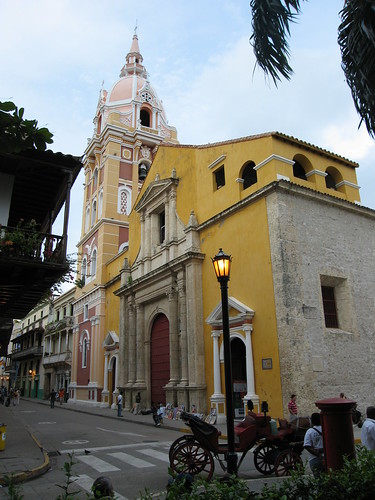
:: Parade in Cartegena ::


A long day's travelling brought us to the city of Cuenca, third largest city in Ecuador and the official home of the Panama hat. We stayed in a hotel overlooking the market, unfortunately the market square was being renovated so it was a building site. It didn't stop the hotel owner from saying that the room still had a great view of the work in progress and we should come back next year for even more of a spectacle. This year it's all JCBs and noise. One of the most unusual things about Cuenca was the morning protein drink of the menfolk. Namely a beer with a raw egg thrown in, it was on sale and being consumed everywhere. After a rainy day in Cuenca stooging around we moved on to the town of Banos up in the highlands.

All memories of Banos revolve around the news that Marcus's sister Maija gave birth to a baby girl, Raina. In celebration we climbed the big hill behind town. The following day we headed for the capital Quito where we threw ourselves into a couple of busy days sightseeing. Unfortunately we left it too late to try skewered whole guinea pig, the delicacy was no where to be found. As the weather became dreary and the rain showers continued at high altitude we began to look forward to moving north towards Colombia's tropical temperatures.


Colombia is a country once synonymous with cocaine, kidnapping, violence and guns. Its tainted reputation means most people associate it with danger. It's an unlikely runner on most people's top ten places to visit. We crossed into Colombia with an open mind and a heightened sense of vigilance. Any nervousness rapidly disappeared as we progressed through the country. In fact the Colombia tourist board embrace this negative misconception and uses it to their advantage, they are currently running a campaign to promote tourism, the TV ads showcases the sites, natural beauty and people of Colombia and the slogan is "Colombia..... the only risk is wanting to stay".

Our first stop was the town of Pasto a few kilometres inside the border. Thankfully we felt like chicken for dinner because there was very little else to eat there. From there we bussed north through stunning scenery to the city of Popayan. Surprisingly Popayan turned out to be a very non-touristy place despite having perfect cobblestones streets, white washed houses and fancy lanterns. It was just an ordinary town with an extraordinary air of pride about it. Beautiful buildings housed normal everyday businesses.Travelling north through the city of Cali we made it to Bogota, a city of horrendous statistics. Allegedly 1 in 5 people in Bogota statistically have a gun, and that's ones that are licensed, the unofficial number is even higher. We found Bogota to be a great city, it has a heavy helpful police presence but overall it has a great vibe. It's old town is a funky area full of bars and restaurants. Budget accommodation options are limited and fill up quickly, if you're not following a guidebook's sanitised accommodation list then you'll typically be asked how long you want the room for. Expected answer is in hours as opposed to days. It sounds seedier than it actually is, it's simply the way things work in this neck of the woods.
We took some time out to visit the police museum, a large portion is dedicated to the successful tracking and capturing of the infamous drug cartel head Pablo Escobar. It was a good museum and our young police guide did his best to answer all fielded questions - although there really was no good answer as to why the supply of cocaine from Colombia has remained unaffected despite the busts and what FARC does out in the jungle with all revenue collected from the multi million business. Pablo Escobar and old style cartels may have died a death but in essence the problem still remains, just in another form.

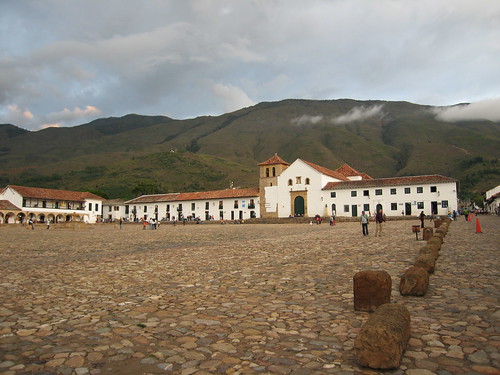
:: Villa de Leyva ::

Scooting through Bucaramanga we reached the picture perfect town of Villa de Leyva, a place where time truly has stood still. There's virtually no modern architecture just old cobblestone streets, whitewashed buildings and doorways and window shutters with dark green shutters. The centre of town, the Plaza Mayor is a huge square fringed by the town Church, restaurants and bars. It's easy to explore the whole town in an afternoon, and you find yourself wondering how they manage to keep it so preserved and devoid of modern trappings.

We kept heading North until we reached the Caribbean and the important milestone of the top of South America in the coastal city of Santa Marta. A combination of heat, humidity, sunshine, colourful street markets and a distinctively more Caribbean looking population made it feel like we'd crossed into a new exciting country. New street food, interesting looking thirst quenching drinks and the appearance of plantains and frijoles (refried beans) with every meal was a clear indication that although we were still in Colombia it was a very different Colombia.


>:: Cartagena ::

Our final stop was the old city of Cartagena, undoubtedly one of the most beautiful cities we've been through. It's described as the jewel of the Caribbean and it's no understatement , it's a very well kept secret. There are two distinctive sides to Cartagena, the ugly modern high rise city and, at a very sensible distance away, the old preserved quarter. Part of the city's beauty is that one doesn't spill into the other and spoil it. Perched on the coast the old colonial old city and fortress dominates the landscape. Inside the old wall, streets upon streets of brightly painted houses support vibrantly coloured bougainvillea plants. Part of the old town is dedicated to swish upmarket restaurants, pedestrian plazas, shops and boutique hotels but you don't have to go far before you stumble upon the more locally orientated businesses. The fact that it's not a cordoned off touristy area devoid of real life adds to its charm. Our few days there hold nothing but good memories, we wandered around the old town and harbour, found a lunch stop that churned out great fresh fish daily and we watched what seemed like constant parades and festivities. An ongoing time consuming task was finding a way out of Colombia and on to Panama.

The challenge of completing our journey overland gets a little trickier when crossing from South America into Central America simply because no road exists between the two. The area around the border is known as the Darien Gap, currently covered in dense jungle and apparently full of drug runners and guerrillas. Not a particularly attractive piece of land to hike through. The other option is to sail around the problem from Cartagena to the San Blas islands in Panama. There are a few European and American captains bobbing around the Caribbean on their yachts who take backpackers between the two points. To catch a boat it is a matter of finding out who was in port and when they were planning on to leave. Of course, it's also a matter of finding a good boat and a competent captain for the five day trip. We bumped into a group of travellers who had made the journey vice versa from Panama, half had a great trip the other half had had a miserable five days being thrown around in a tiny boat amidst big waves. We sniffed out the "great" trip and hooked up with Fritz-the-Cat a 50ft catamaran captained by an Austrian, Fritz. From the outset everything bode well, the boat was only carrying half its usual passenger capacity so we all got cabins. Normally the cat carries twelve people plus captain on the journey. With only six passengers/crew on our crossing there was more than enough room.

Our cruise through the Caribbean got off to a slow start - we spent the first day stuck in the harbour waiting for our passports to be returned by port authorities with exit stamps. Waters in the harbour were flat and gentle so naturally everyone was feeling great - all set for the voyage. We eventually got the go ahead that all the paperwork has been completed, we pulled up anchor and sailed for the open seas, narrowly missing an unlit buoy on the way out. About an hour later half the people on the boat were stuck down by severe seasickness as we ventured out into the rougher, choppier waters. One of the advantages of the catamaran is its stability in the water. We can only imagine how much more violent the trip would be on a smaller yacht.

Part of the deal when you catch one of these yachts is that you help out crewing for the journey. So for the three members not effected by seasickness the first night consisted of long stints on watch. Autopilot kept us on course but torrential rain and winds meant that we had to be on the lookout for anything around us that we could potentially collide with. On day two things deteriorated, the weather improved but midway through the day the autopilot decided to die so the remainder of the journey in the open seas (24 hours) had to be steered manually. Sailing a straight course manually is not easy at all, constant correction and concentration is required. Even then it's almost impossible not produce a zigzag pattern on the GPS map. We came to really appreciate the value of autopilot and just how precise it is. By the second night the seasickness still hadn't abated and half the crew were on deck moaning and generally feeling rotten. The autopilot was still on the blink so tired eyes manually steered the course (with some mad off course portions).

:: Dinner ::

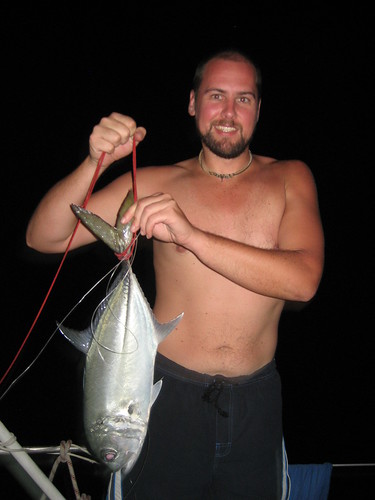
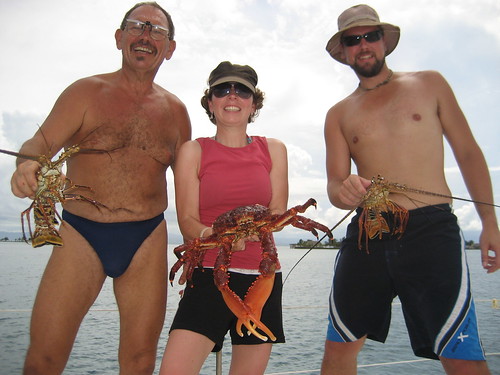
Day three brought the end of the open seas, all of a sudden the water grew calm and bath like as we glided into new territory, the San Blas island archipelago - small little Robinson Crusoe islands complete with deserted white beaches and palm trees. All sickness and associated bad memories disappeared and for the next two days we swan, snorkeled and fished - successfully may I add, Marcus caught a baby shark on his first go followed by a mackerel that fed the boat. Each day Fritz would grab a couple of lobsters from under a rock and we'd have them for dinner. Locals from the area came by selling monster crabs and lobsters..... we were spoiled by top of the shelf gourmet seafood. Fritz turned out to be an ex-restaurateur and chef so each morning we woke up to the smell of freshly baked brown bread and hungrily looked forward to every meal.


:: Captain Fritz....and lunch ::

We technically reached Panama by swimming from the boat to the shore of a little paradise island, a novel entry into a country. Officially we entered the following day. Saying goodbye to Fritz and the catamaran we stepped ashore and crowded into jeeps destined for Panama City. We were left with more than memories of our Caribbean cruise, it took a full three days for the ground to finally stop swaying underneath us.


:: San Blas vista ::

Read Full Post...

  © Blogger templates The Professional Template by Ourblogtemplates.com 2008

Back to TOP