Site Feed (Atom)
Zhaoxing : Wooden Bridges, Metre High Arsonists and a Beard Butcher

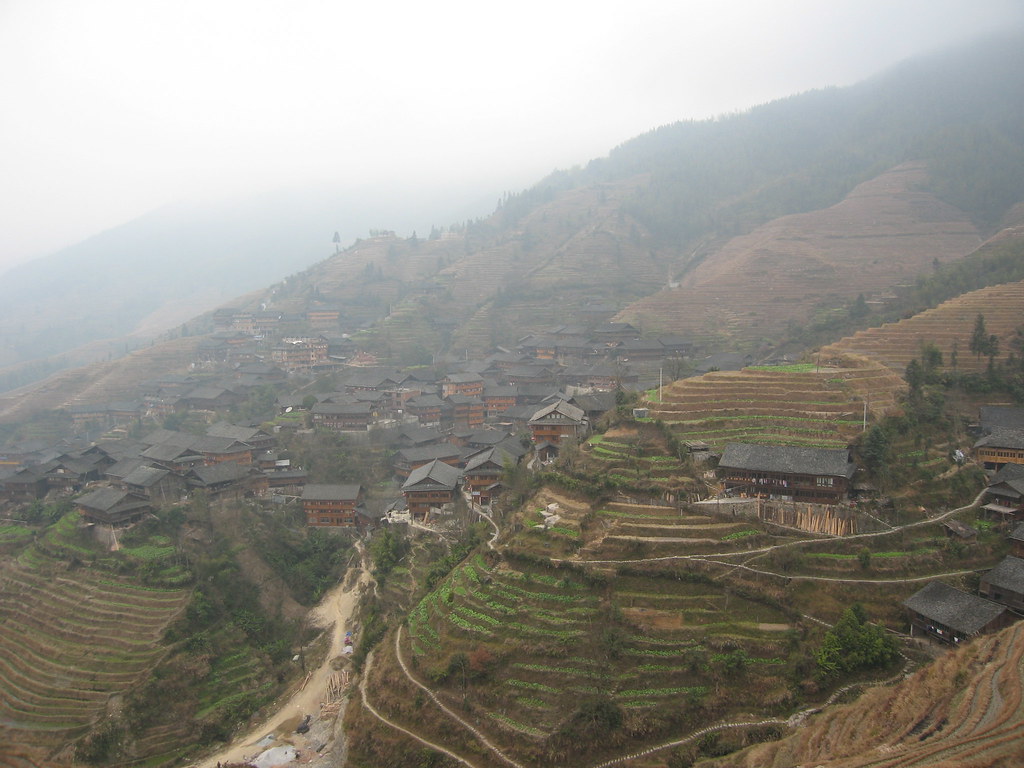
The journey from Sanjiang to Zhaoxing is a breathtaking ride up high into the mountains. There are amazing views of surreal green terrace fields and valleys below - through the fog we caught a glimpse of some of these. The experience is aided by the new smooth road that snakes along the route.

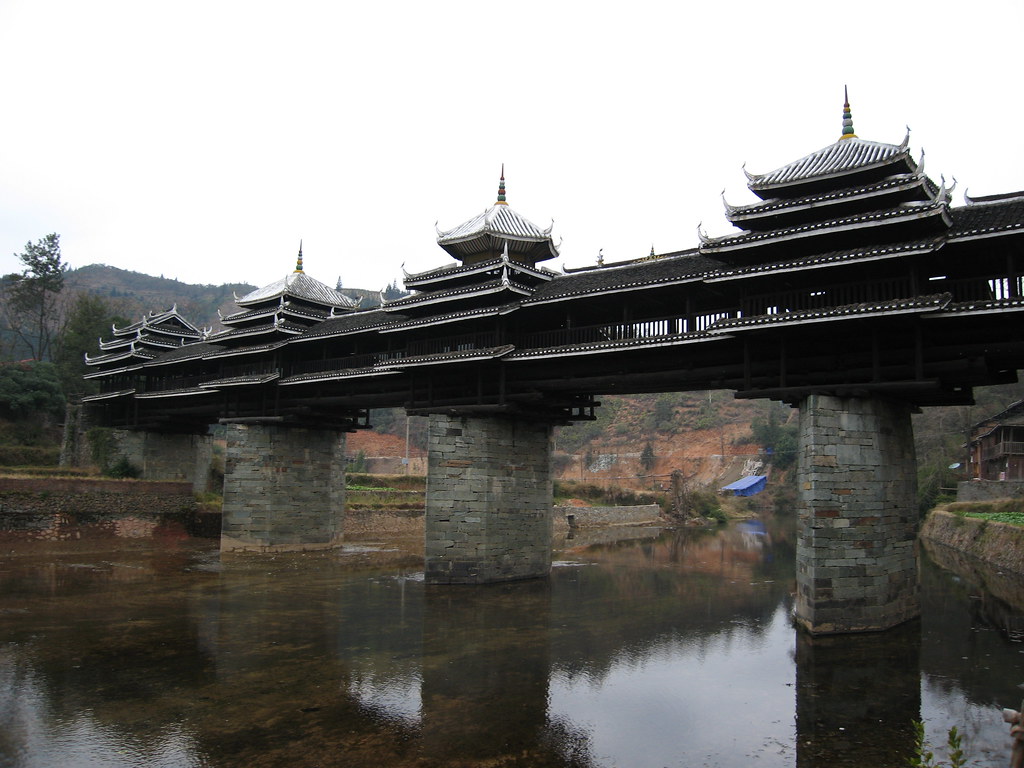
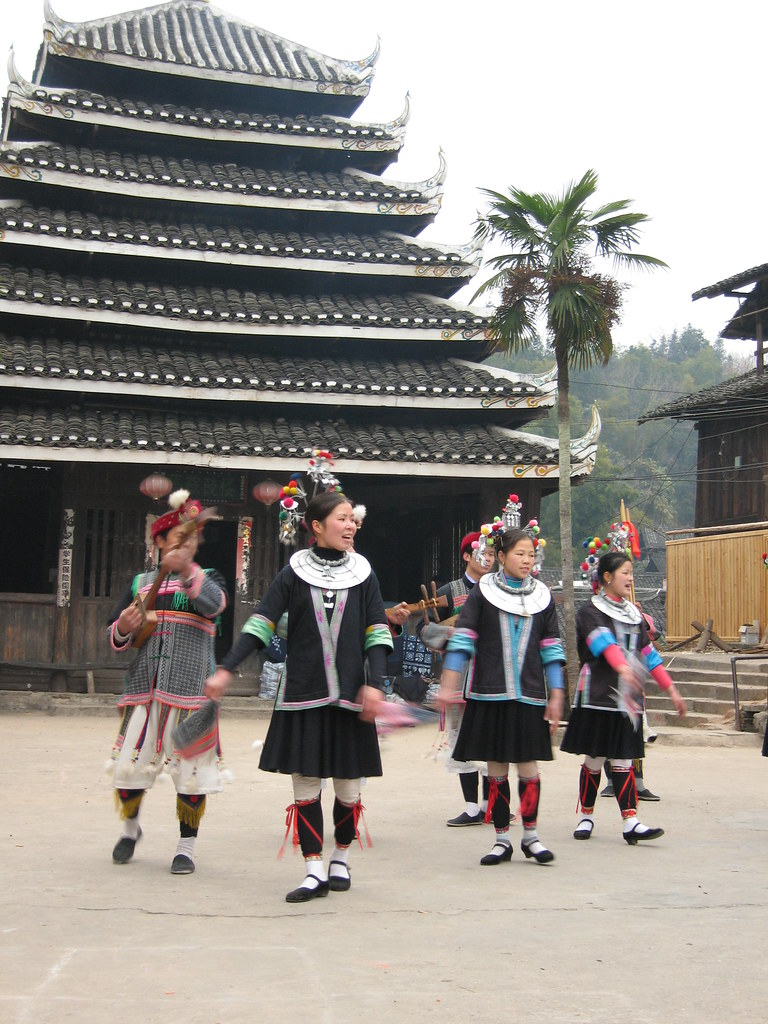
Zhaoxing, another wooden Dong village which has a picturesque location in a green valley, it looks like a Swiss alpine village tucked away in the mountains. With it's five drum-towers and many covered bridges over little rivers it has a unique character of it's own. Local craft making is a big industry in this town. Women make an indigo cloth which is pounded for hours with a wooden mallet; the dyed cloth can be seen hanging out to dry throughout the town. The cloth is embroidered and used for batiks and traditional clothing.

The village streets are overrun by an army of small boys up to no good. While their female counterparts are off helping around the house these 4 year olds are busy throwing bangers (grenade style - they've seen the movies) in doorways, under old peoples feet and into rubbish bins then running away around the corner. It's like Baghdad - the explosion noises are deafening. Those who have no bangers can be found in little groups on the ancient wooden bridges with a lighter and any flammable item the arsonists can find - toilet paper seemed to be easy to source! The fires are lit with great excitement, once they've gone out, a search party heads out to find more fuel. It's not the wisest of "games" to be playing in a village constructed solely of wood.

Marcus couldn't resist getting a closer look at the "exploding banger underwater" move .... after revealing he'd a supply of matches in his pocket he quickly attracted a crowd.
Marcus picks up the tale...
One of the obvious activities while travelling is getting a haircut, well for most anyway. I have had the nervous pleasure of striding into barbers in Mongolia and China, gesticulating vaguely then walking out a dollar or two lighter, clean cut. Under our hotel in Zhaoxing was a small hairdresser so I decided to head in to get the usual blade 3 all over ( beard included).
As is custom I set a price before he got going - it would cost 10 RMB which is 1 euro.
Round 1 - Gesticulation from barber (translated as " do you want a hair wash?"
(The old tactic of changing the service to change the price me thinks....so " no thanks")
Round 2 - clippers vs hair, no problem at all.
Round 3 - clippers vs beard, quick run through, no problem.
Round 4 - Barber produces a cut throat and starts tidying up the outline of the beard, during this he motions to the washing station - OK, I think, he wants to lather me up and do a proper job.
Round 5 - Mr barber guy washes my hair and starts getting out all these steamy towels.
Round 6 - The razoring continues...and continues...I'm thinking he has made a mistake and is balancing things up...but it continues...and continues...until he is done.
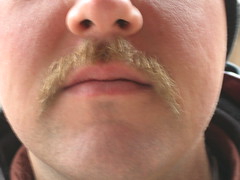
Round 7 - Merv or Chopper ? ......(Oh and all that razoring was still 10RMB )


We had Zhaoxing village completely to ourselves.... all the other tourists had sensibly stayed in the southern provinces out of the winter cold. The tourist information centre was closed for the winter and even the locals were wearing multiple layers and huddled around fires to keep warm. Marcus remarked that something is wrong when it's too cold to enjoy a cold beer.
Taking a hike a couple of miles out of the village (to keep warm) we decided that we'd be miserable further north where it's even colder being cold all the time is too much effort ..... so we're calling a spade and spade and running south to the sunshine.
Read Full Post...

Zhaoxing, another wooden Dong village which has a picturesque location in a green valley, it looks like a Swiss alpine village tucked away in the mountains. With it's five drum-towers and many covered bridges over little rivers it has a unique character of it's own. Local craft making is a big industry in this town. Women make an indigo cloth which is pounded for hours with a wooden mallet; the dyed cloth can be seen hanging out to dry throughout the town. The cloth is embroidered and used for batiks and traditional clothing.
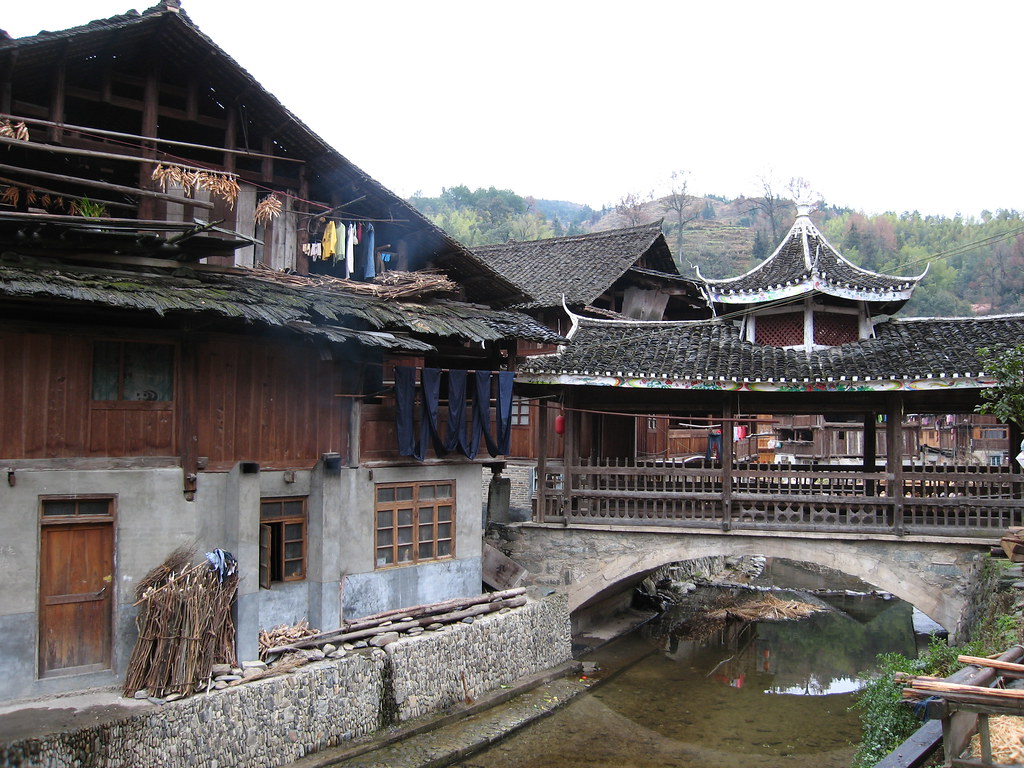
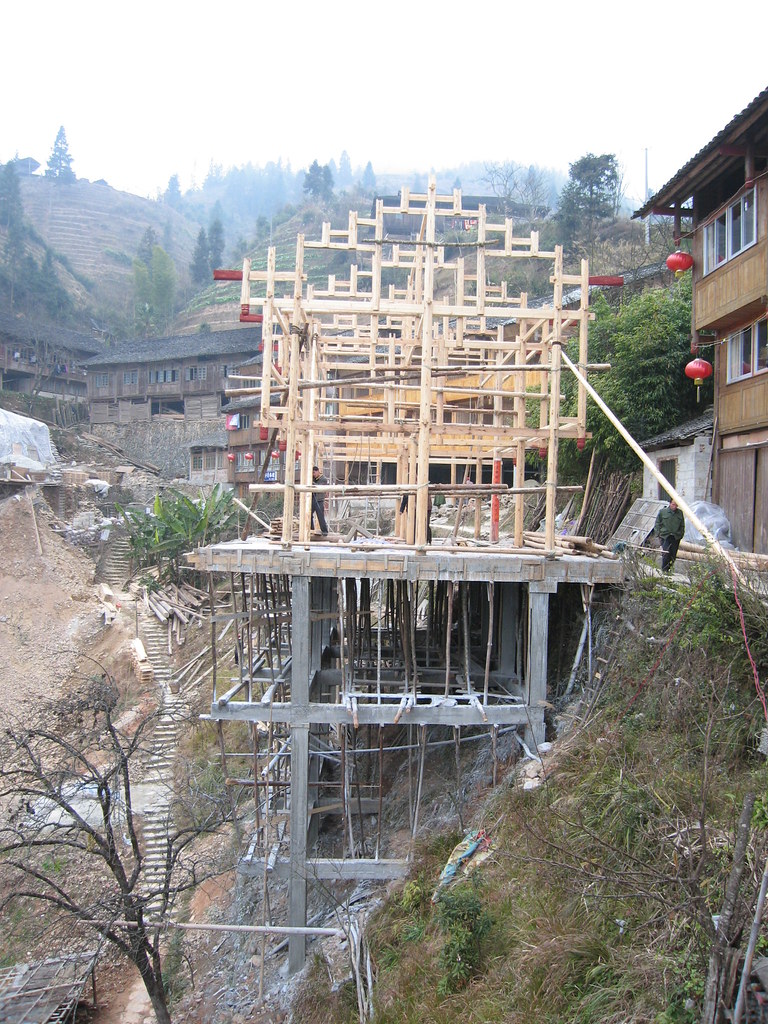
The village streets are overrun by an army of small boys up to no good. While their female counterparts are off helping around the house these 4 year olds are busy throwing bangers (grenade style - they've seen the movies) in doorways, under old peoples feet and into rubbish bins then running away around the corner. It's like Baghdad - the explosion noises are deafening. Those who have no bangers can be found in little groups on the ancient wooden bridges with a lighter and any flammable item the arsonists can find - toilet paper seemed to be easy to source! The fires are lit with great excitement, once they've gone out, a search party heads out to find more fuel. It's not the wisest of "games" to be playing in a village constructed solely of wood.
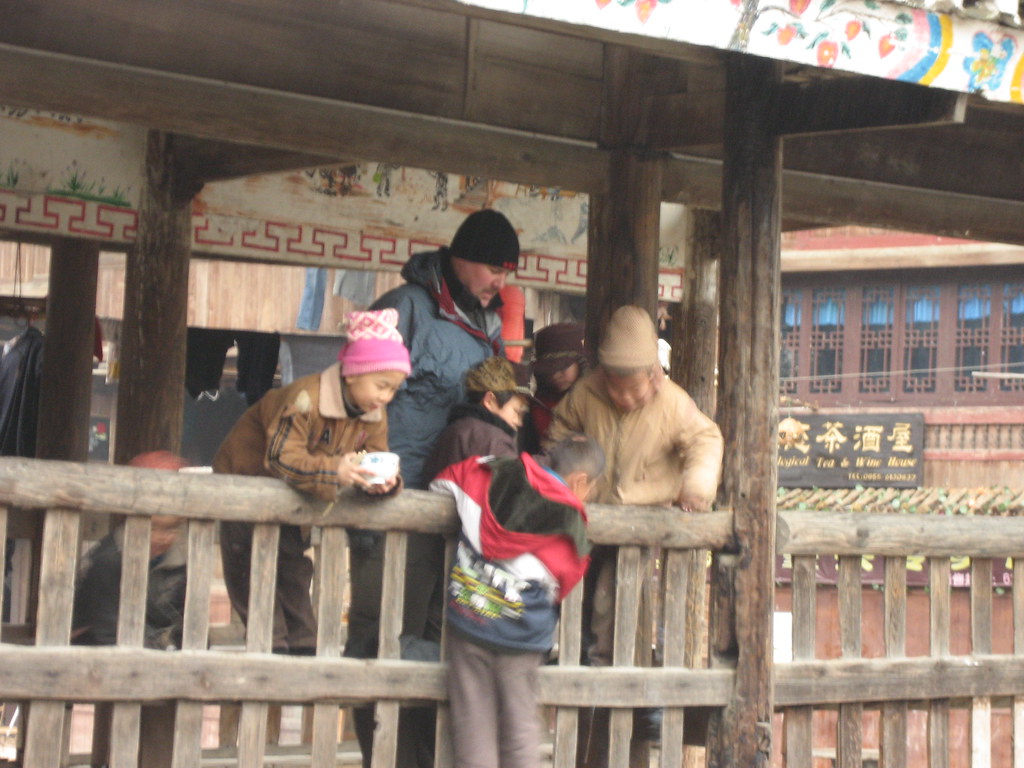
Marcus couldn't resist getting a closer look at the "exploding banger underwater" move .... after revealing he'd a supply of matches in his pocket he quickly attracted a crowd.
Marcus picks up the tale...
One of the obvious activities while travelling is getting a haircut, well for most anyway. I have had the nervous pleasure of striding into barbers in Mongolia and China, gesticulating vaguely then walking out a dollar or two lighter, clean cut. Under our hotel in Zhaoxing was a small hairdresser so I decided to head in to get the usual blade 3 all over ( beard included).
As is custom I set a price before he got going - it would cost 10 RMB which is 1 euro.
Round 1 - Gesticulation from barber (translated as " do you want a hair wash?"
(The old tactic of changing the service to change the price me thinks....so " no thanks")
Round 2 - clippers vs hair, no problem at all.
Round 3 - clippers vs beard, quick run through, no problem.
Round 4 - Barber produces a cut throat and starts tidying up the outline of the beard, during this he motions to the washing station - OK, I think, he wants to lather me up and do a proper job.
Round 5 - Mr barber guy washes my hair and starts getting out all these steamy towels.
Round 6 - The razoring continues...and continues...I'm thinking he has made a mistake and is balancing things up...but it continues...and continues...until he is done.
Round 7 - Merv or Chopper ? ......(Oh and all that razoring was still 10RMB )


We had Zhaoxing village completely to ourselves.... all the other tourists had sensibly stayed in the southern provinces out of the winter cold. The tourist information centre was closed for the winter and even the locals were wearing multiple layers and huddled around fires to keep warm. Marcus remarked that something is wrong when it's too cold to enjoy a cold beer.
Taking a hike a couple of miles out of the village (to keep warm) we decided that we'd be miserable further north where it's even colder being cold all the time is too much effort ..... so we're calling a spade and spade and running south to the sunshine.